
A System That Failed Them First: The Complete Collapse of Services Protecting Children in the UK
Posted on:
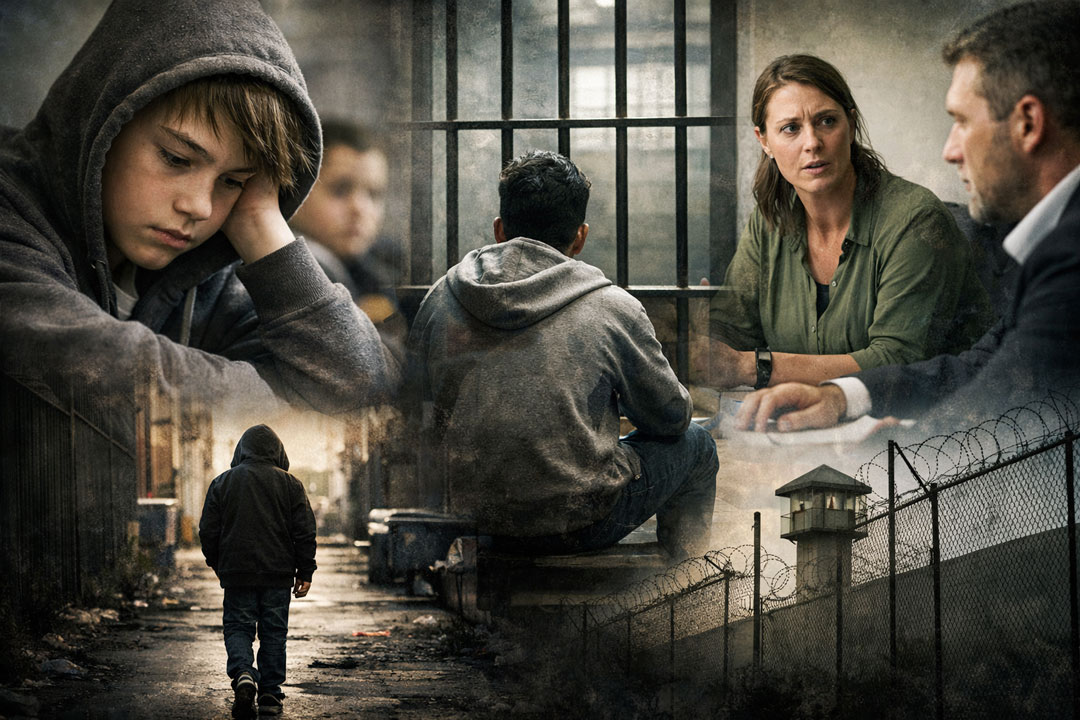
When a child enters the youth justice system, it is not the beginning of failure — it is the final confirmation that every service meant to protect them has already failed.
This is not a critique of youth justice alone. It is an indictment of education, children’s services, mental health provision, and multi-agency safeguarding — systems that repeatedly intervene too late, set thresholds too high, and prioritise process over people.
The statistics are unequivocal.
The case studies are disturbingly consistent.
The outcomes are entirely predictable.
This is not chance.
It is systemic failure by design.
The Numbers That Expose the Truth
The data paints a stark picture of who ends up in the youth justice system — and why:
- Over 75% of children in custody have been permanently excluded from school at some point in their lives
- Children in custody are more than 20 times more likely to have been excluded than their peers
- Around 45–50% have a diagnosed mental health condition, with many more undiagnosed
- More than 60% have speech, language, or communication needs that were never properly identified or supported
- Around one third have experience of the care system, despite care-experienced children making up less than 1% of the general child population
- Over 65% of children released from custody reoffend within a year
These are not marginal statistics.
They describe a pipeline — from unmet need, to exclusion, to criminalisation, to custody.
Sam’s Case Study: Failed Early, Survived Late
Before the data, before the policy language, before the programmes — there is lived experience.
Sam’s story is not an exception. It is a warning.
At 14 years old, Sam was sent to a secure unit. He had already been failed by school, by early help, by stability, and by support systems that noticed problems but never addressed causes.
What followed was not protection — it was containment.
After release, Sam spent the next 10 years in and out of prison and homelessness, not because help was unavailable, but because it arrivedtoo late, too briefly, and without belief.
There was no joined-up plan.
No consistent adult.
No pathway that made sense.
The system intervened repeatedly — just never early enough to prevent harm.
Sam did not “fall through the cracks”.
He lived inside them.
Case Study One: Excluded, Ignored, Criminalised
“Aaron” (15) had been flagged by school from Year 7. Teachers noted emotional dysregulation, difficulty concentrating, and frequent outbursts. His mother repeatedly asked for help.
What followed was familiar:
- No full SEND assessment
- Short-term behaviour plans
- Fixed-term exclusions escalating to permanent exclusion at 13
Once excluded, Aaron attended fragmented alternative provision two days a week. Staffing was inconsistent. Expectations were low.
Children’s services assessed and closed the case: “No immediate safeguarding risk.”
Mental health referrals were rejected twice due to missed appointments — appointments Aaron was too anxious to attend alone.
By 14, Aaron was arrested for low-level offences linked to peer pressure and lack of supervision. By 15, he was in custody.
Aaron did not choose this path.
He was systematically stripped of support until custody became inevitable.
Education: The First and Most Consistent Failure
Permanent exclusions in England have risen steadily over the past decade. Children with special educational needs and disabilities are up to seven times more likely to be excluded than their peers. Boys, care-experienced children, and those from deprived communities are massively overrepresented.
Exclusion is often framed as safeguarding for others.
But there is no safeguarding plan for the child being removed.
Once excluded:
- Attendance drops
- Mental health deteriorates
- Police contact increases
Education systems do not hand children over safely.
Too often, they push them out and look away.
Case Study Two: Care-Experienced and Written Off
“Leah” (16) entered care at 11 due to neglect. Over four years, she experienced six placements.
Each move meant:
- A new school
- Lost records
- Re-triggered trauma
By 14, Leah was excluded following repeated incidents linked to emotional distress. She spent long periods without education.
Professionals described her as “volatile” and “high risk”.
What Leah needed was stability and therapeutic support.
What she received was restraint, sanctions, and eventually custody for breaching bail conditions she did not fully understand.
Leah was not dangerous.
She was overwhelmed, unheard, and repeatedly abandoned.
Children’s Services: Thresholds Over Children
Children’s social care is supposed to be the safety net. For many young people, it becomes another closed door.
Across England:
- The majority of referrals receive no statutory intervention
- Cases are frequently stepped down or closed, even when need is acknowledged
Support is time-limited. Concern is documented.
Action comes only when risk becomes acute.
Safeguarding that waits for crisis is not safeguarding.
It is risk management, not protection.
Mental Health Services: Locked Out Until It’s Too Late
Waiting times for child and adolescent mental health services routinely exceed a year. Referrals are often rejected because:
- Behaviour is labelled “conduct” rather than mental health
- Children miss appointments due to anxiety or instability
- Thresholds are set impossibly high
Yet over half of children in custody have mental health needs severe enough to require specialist support.
The system waits until behaviour becomes criminal — then expresses concern.
That is not care.
That is neglect with paperwork.
Case Study Three: Known to Everyone, Helped by No One
“Jay” (14) was known to:
- School
- Police
- Children’s services
- Youth offending services
He had experienced domestic abuse, bereavement, and homelessness.
Every agency had information.
No agency took ownership.
Plans were written. Reviews were held.
Support was minimal and inconsistent.
Jay breached an order after missing appointments that clashed with unstable housing and untreated anxiety.
He ended up in custody.
Jay did not fall through the cracks.
He was processed through them.
Do Professionals Genuinely Care?
Many professionals entered this work because they care.
But caring that does not change outcomes is not enough.
When exclusion is routine, referrals are rejected, cases are closed knowing nothing has improved, and custody becomes predictable — good intentions are no longer a defence.
Caring cannot mean quiet compliance.
It must mean challenging systems that cause harm.
Sam’s Reflection: 26 Years on the Frontline
“For 26 years I’ve worked with young people the system labels as ‘hard to reach’.
The truth is, they were never hard to reach — services just stopped reaching early enough.”“I’ve watched the same patterns repeat: exclusion, rejection, short-term fixes, and then shock when a child ends up in custody.
The system hasn’t changed — the faces have.”“Boss Your Future exists because I know first-hand what happens when belief arrives too late.
We work early, we stay consistent, and we don’t give up — because someone finally doing that is what saved my life.”
This Is a Failure of Design, Not Delivery
The youth justice crisis is not the result of a few broken services.
It is the predictable outcome of a system designed to:
- Intervene late
- Prioritise risk over need
- Fragment responsibility
- Criminalise vulnerability
- Measure activity instead of impact
Children are not broken.
The system around them is.
Youth Matters 2026: From Failure to Futures
This blog is not written to provoke outrage alone — it is written to force action.
Youth Matters 2026 demands systemic change:
- Stop criminalising vulnerability
- Intervene early
- Redesign youth support around what actually works
Through Boss Your Future, we work before exclusion becomes custody, providing:
- Consistent, trusted adults
- Trauma-informed, real-world support
- Practical skills, enterprise pathways, and employment routes
- Belief — before a child has to prove themselves
We do what the system too often doesn’t: stay, support, and refuse to give up.