
NO EXPERIENCE. NO JOB. NO WAY IN: Why Young People Need Real Work Experience Before They Leave School
Posted on:
We tell young people they need experience to get a job. Then we remove the opportunities that once gave them that experience.
That contradiction sits at the heart of one of the biggest challenges facing young people today.
The Government-commissioned Young People and Work interim report, led by Rt Hon Alan Milburn, opens with a stark warning: nearly one million 16–24-year-olds in the UK are not in education, employment or training — around one in eight young people.
Read the Government’s Young People and Work interim report
But this isn’t simply a story about young people becoming NEET.
It is about what happens before they get there.
Entry-level opportunities have become harder to access. Employers want work-ready young people. Young people are expected to demonstrate experience. Yet too many reach the end of education without having had enough meaningful opportunities to experience the workplace for themselves.
So we need to ask a much harder question:
How is a young person supposed to get experience if nobody gives them the opportunity to gain it?
At Genuine Futures, we believe part of the answer must begin before young people leave education — and before they reach crisis.
“The Engagement Has Been Brilliant”
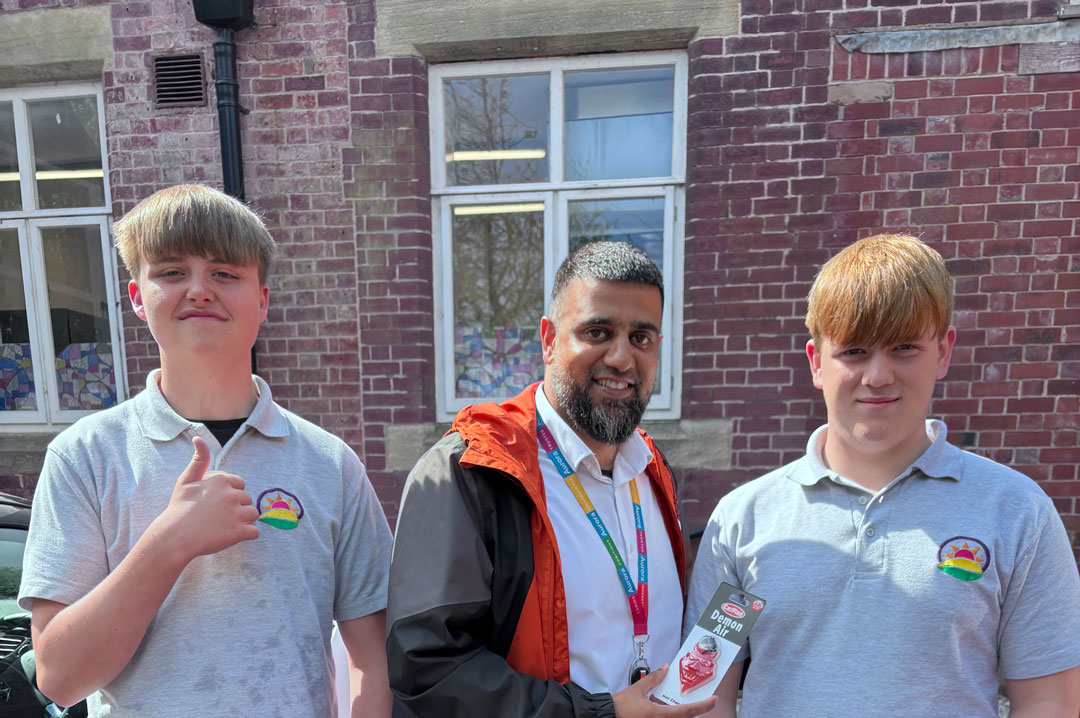
We have recently seen what that can look like through our work with Woodlands Aurora School and the development of We Shine Any Car Skills Academy.
This wasn’t a group of young people sitting in a classroom completing a worksheet about employability.
They were doing something real.
They had a task to complete, standards to meet, other people relying on them and an opportunity to take responsibility for the quality of their work.
Stuart Jamieson from Woodlands Aurora saw the impact first-hand.
He described the team ethic as dynamic and spoke about young people remaining focused and fully engaged despite it being one of the hottest days of the year.
One moment particularly stood out.
A student had become so focused on doing the job properly that they began coaching a teaching assistant:
“No, you’re not doing it right — this should be more circular movements.”
Think about what is happening in that moment.
That young person has learned a skill, understood a standard, developed confidence and begun transferring their knowledge to somebody else.
Stuart’s verdict?
“The engagement has been brilliant.”
For us, that is much bigger than cleaning a car.
It is what can happen when a young person is trusted with something real.
Three Years Developing the Proof of Concept
We Shine Any Car Skills Academy hasn’t appeared overnight.
For the last three years, Genuine Futures has been developing the proof of concept for something much bigger: world-class education programmes that connect young people with real life, real work and real opportunity.
We have listened to young people.
We have worked alongside schools, employers, community organisations and partners.
We have tested practical approaches in real environments.
And we have learned from young people themselves about what can engage those who don’t always thrive through traditional routes.
Again and again, we have seen something powerful.
When young people are trusted with something real, expectations can change.
Give them responsibility.
Give them a customer.
Give them a team that depends on them.
Give them a problem to solve.
Give them a standard to meet.
Give them the opportunity to see the result of their work.
Suddenly, we aren’t talking about employability as an abstract concept.
Young people are experiencing it.
We Shine Any Car Skills Academy Is Just One of Them
This distinction is important.
Genuine Futures isn’t becoming a car-washing organisation.
We Shine Any Car Skills Academy is one of the education programmes emerging from three years of developing, testing and learning.
Our ambition is to build a portfolio of world-class practical education and enterprise programmes that bridge the gap between education and the changing world of work.
Because young people learn differently.
Potential does not disappear because somebody struggles in a classroom.
A practical working environment can become a classroom.
A customer interaction can develop communication.
Completing a job can develop organisation and problem-solving.
Working alongside others develops teamwork and accountability.
Taking responsibility for quality develops standards.
Enterprise can introduce a young person to possibilities they may never previously have imagined.
We aren’t trying to build a better car-washing programme. We are using enterprise to help build a better bridge between education and employment.
The Milburn Review Shows Why That Bridge Is Needed
The national evidence makes this work urgent.
The Milburn Review was commissioned to examine the increase in the number of young people who are not in education, employment or training. Its first phase provides a diagnosis of the problem before the review moves towards potential reforms.
The report describes almost one million young people as a “generational fault line” and argues that the problem is increasingly about detachment from the labour market, rather than temporary youth unemployment alone.
This is why prevention matters.
Waiting until a young person has already become disconnected is too late to start thinking about whether they have experienced work, developed confidence or built relationships with employers.
We need to build those foundations earlier.
Teachers Are Telling Us the Same Thing
The Government’s research with 1,004 teachers and education professionals should command just as much attention.
It found that 74% believed there was too much focus on passing exams, while 73% said there was not enough focus on preparing young people for employment and the same proportion said there was insufficient emphasis on soft skills.
Crucially, 92% supported greater access to applied or vocational pathways before age 16, and 95% supported alternative pathways for young people who struggle with the existing curriculum.
Read the Government’s Survey of Education Professionals: Young People and Work
This isn’t an argument for lowering academic standards.
In fact, 73% believed the curriculum could include a broader range of work-related knowledge and skills while maintaining high academic standards.
That distinction matters.
This isn’t education versus employment. It is about preparing young people for both.
Only 8%: A Statistic We Cannot Ignore
When Alan Milburn gave evidence to the House of Commons Work and Pensions Committee, he discussed the concerns employers had raised about work readiness.
He also cited polling in which only 8% of teachers believed the curriculum and the way schools were set up adequately prepared young people for the world of work, saying this was partly about careers, work experience and other factors.
Read Alan Milburn’s evidence to the Work and Pensions Committee
That should make all of us stop.
Because if employers are asking for work-ready young people while education professionals are questioning whether young people are receiving enough preparation for work, there is a gap somewhere in the middle.
That is the gap we want to help bridge.
The First Rung Matters
We cannot keep telling young people:
“You need experience.”
And then make their first opportunity dependent upon already having it.
For generations, Saturday jobs, part-time employment, apprenticeships and other entry-level opportunities gave young people relatively low-risk ways to learn what work actually felt like.
Turn up on time.
Speak to a customer.
Take instructions.
Work with people you don’t know.
Make mistakes.
Learn.
Take responsibility.
Earn.
Build confidence.
Get your first reference.
Put your first experience on a CV.
When those first rungs become harder to reach, the consequences go far beyond employment statistics.
We risk removing the very environments in which young people learn how to work.
What If Real Work Experience Started Before Crisis?
At Genuine Futures, our belief is simple:
Prevention before crisis.
Why wait until somebody is 18, unemployed, repeatedly rejected and losing confidence before introducing them to meaningful workplace experiences?
Why not begin earlier?
That is part of what we are developing through We Shine Any Car Skills Academy.
A young person doesn’t sit in a classroom being told what teamwork means.
They have to work as a team.
They aren’t given a worksheet about responsibility.
Somebody is relying on them.
They aren’t asked to imagine workplace standards.
There is a real standard to meet.
They don’t simply learn about enterprise.
They experience it.
The Car Is the Vehicle. Opportunity Is the Destination.
We need to be absolutely clear about this.
We are not trying to create a generation of car washers.
Some young people may discover an interest in vehicle care, valeting, mechanics or the automotive industry.
Others may progress into construction, engineering, hospitality, logistics, retail, college, apprenticeships, employment or enterprise.
What matters are the transferable skills and experiences they take with them:
Communication • Teamwork • Timekeeping • Customer service • Responsibility • Problem-solving • Quality • Confidence • Leadership • Enterprise
The car creates the environment.
The young person’s future is the purpose.
We Cannot Demand Experience While Removing the Places Young People Gain It
Somewhere between education and employment sits a young person thinking:
“How am I supposed to prove myself if nobody lets me start?”
Schools cannot solve that alone.
Employers cannot solve it alone.
Government cannot solve it alone.
Funders cannot solve it alone.
Community organisations cannot solve it alone.
But together, we can create more places where young people experience work before they are expected to compete for it.
And that requires action.
FOUR CALLS TO ACTION
SCHOOLS — LET’S BRING THE REAL WORLD INTO LEARNING
If you have young people who would benefit from practical learning, enterprise, responsibility and a different environment in which to demonstrate their potential, talk to us.
We want to work with schools and SEND settings to develop structured opportunities where young people can build practical and transferable skills alongside their education.
Don’t wait until a young person disengages completely. Let’s create the opportunity earlier.
ALTERNATIVE PROVISION COMMISSIONERS & LOCAL AUTHORITIES — HELP US BUILD THE BRIDGE BEFORE CRISIS
If you commission provision for young people who are struggling to engage with traditional education, we want to start a conversation.
We believe practical enterprise can form part of a wider preventative pathway — giving young people opportunities to develop confidence, work-readiness, responsibility and progression.
Let’s explore how We Shine Academy can complement existing local provision and create another route towards success.
FUNDERS & SOCIAL INVESTORS — HELP US TURN PROOF OF CONCEPT INTO SCALE
For three years we have been developing, testing and learning.
Now we want to strengthen the evidence, develop our education programmes, measure outcomes and build the infrastructure required to reach more young people.
We are looking for funders and social investors who understand that prevention requires investment before the crisis appears in the statistics.
Don’t simply fund another short-term intervention.
Help us build sustainable pathways that can last.
BUSINESSES & EMPLOYERS — BECOME PART OF THE FIRST RUNG
Businesses have an enormous role to play.
You can provide contracts, workplace visits, mentoring, equipment, skills, work experience, progression opportunities, sponsorship and — where appropriate — that vital first job.
Young people need employers prepared to look beyond an empty CV and see the potential behind it.
If your business believes in developing the workforce of tomorrow, help us give young people somewhere to start today.
Our Challenge Is Simple
We know young people need experience.
We know employers need work-ready young people.
We know teachers want stronger vocational and alternative pathways.
We know almost one million young people are already outside education, employment or training.
So why would we wait?
At Woodlands Aurora, Stuart Jamieson saw what can happen when young people are given something real to engage with:
“The engagement has been brilliant.”
Now imagine if we could create more of those opportunities.
Not after a young person has disappeared from education.
Not after 100 rejected applications.
Not after their confidence has collapsed.
Not when the crisis has already happened.
Before.
We need to build the bridge before young people reach the gap.
LET’S BUILD IT TOGETHER
If you are a school, alternative provision commissioner, local authority, funder, social investor or business, we want to hear from you.
Let’s create environments where young people can gain real skills, real responsibility, real experience and real opportunities.
We Shine Any Car Skills Academy
Cleaner Cars. Brighter Futures.
Genuine Futures CIC
Bridging the gap to opportunity.
 hello@genuinefutures.co.uk
 01204 954200
Visit Genuine Futures
Key reports and evidence
Young People and Work: Interim Report — Department for Work and Pensions
Young People and Work: Full Interim Report — GOV.UK
Survey of Education Professionals: Young People and Work — GOV.UK
Young People and Work: Survey with Education Professionals — April 2026 interim findings
Alan Milburn: Oral Evidence to the Work and Pensions Committee — 20 May 2026
Work and Pensions Committee: Youth Employment, Education and Training Inquiry