From the NEET Crisis to NEET ZER0
Posted on:
The NEET crisis is about people not percentages
Across the UK, too many young people are becoming disconnected from education, employment and training. The Office for National Statistics estimated that 981,000 people aged 16 to 24 were not in education, employment or training between April and June 2026. That was an increase of 30,000 compared with the same period a year earlier.
The national figure matters, but the local picture is just as important. Ofsted’s area data reports 353 known 16 and 17-year-olds in Bolton as NEET, representing 4.1% of the local cohort. Every number represents a young person with their own abilities, relationships, pressures and ambitions. Some are visible to services. Others are isolated at home, struggling with confidence, waiting for a first conversation or unsure where to begin.
The challenge is often described as a skills problem or a lack of motivation. Our experience tells us that this explanation is too narrow. Many young people have experienced exclusion, disrupted education, care, involvement with youth justice, poor mental health, insecure housing or repeated rejection. Before asking them to enter another programme, we must ask whether they trust the people offering it and whether the opportunity feels relevant, safe and achievable.
Almost 30 years of roots in youth organising
Genuine Futures CIC was established in 2023, but our roots in youth organising go back almost 30 years. They come from lived experience, frontline work, entrepreneurship, community action and years of standing alongside young people who have been underestimated or written off.
That history has taught us a simple lesson: change lasts when young people help organise it. Youth voice should not be added at the end of a project as a consultation exercise. Young people need a genuine seat at the table from the beginning, with the power to influence priorities, design activities, challenge assumptions and lead visible action in their communities.
Our work in Bolton and Salford has shown what can happen when practical experiences are combined with trusted relationships. Through early Boss Your Future cohorts, young people have explored enterprise ideas, progressed into college and employment, started micro-businesses and taken on youth voice and ambassador roles. These outcomes matter, but the deeper progress often begins earlier: leaving the bedroom, arriving at a session, speaking to somebody new, trying an unfamiliar activity or returning the following week.
A youth led think and do tank
We describe Genuine Futures as a youth-led think-and-do tank for bridging the gap to employment and enterprise opportunities. The phrase is deliberate. A traditional think tank researches problems and makes recommendations. Genuine Futures also listens, learns and shares evidence, but we test ideas with young people in real settings and turn learning into practical opportunities.
Our knowledge comes from several places: young people’s lived experience, families, employers, schools, community organisations, local services and our own delivery. We use that knowledge to understand why young people disengage, develop responses with them, test those responses through programmes and youth-led enterprises, and feed the learning back to partners and decision-makers.
This approach helps close the gap between strategy and reality. A policy may describe a pathway into work, but a young person cannot use that pathway if they do not trust the service, cannot travel to it, feel overwhelmed in formal environments or have never had the opportunity to discover their strengths. A think-and-do model identifies those practical barriers and works alongside young people to remove them.
The Genuine Futures youth organising blueprint
Our blueprint is not a rigid course that assumes every young person starts from the same place. It is a flexible pathway with six connected stages.
Why Finding My Future comes before Boss Your Future
One of our most important lessons is that a 12-week programme cannot begin successfully if a young person is not yet ready to enter the room. That is why we introduced Finding My Future as a relationship-led stage before Boss Your Future.
Finding My Future creates time to listen, restore trust, identify interests and take manageable steps. For one person, progress may be answering a telephone call. For another, it may be meeting at home, visiting the hub with a parent, joining a social activity or spending an hour outdoors with the group. These steps are not peripheral to the programme. They are part of the intervention and often determine whether later training or employment support succeeds.
This is also why roll-on, roll-off provision matters. Young people do not become ready according to commissioning dates. A continuous pathway allows support to begin when trust is established and enables progression at a pace that responds to the individual.
Outdoor learning and social connection are part of the pathway
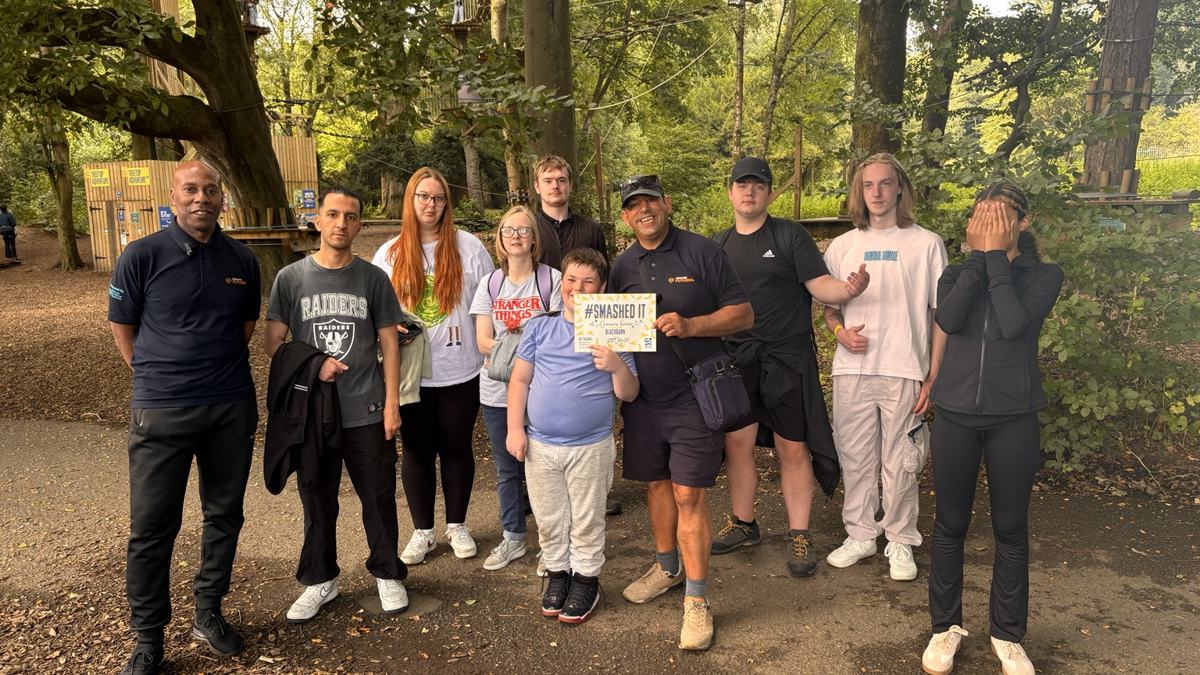
Outdoor activities are not simply rewards or days out. They create different conditions for learning. A walk, team challenge, archery session or shared community activity can reduce pressure, encourage conversation and reveal strengths that may remain hidden in a classroom.
Young people practise communication, decision-making, patience and teamwork. They experience manageable risk, solve problems together and form friendships. For somebody who has become isolated, the first meaningful outcome may be belonging to a group and recognising that other people notice when they show up.
These experiences build the social and emotional foundations needed for employment and enterprise. Confidence is not taught through a worksheet. It develops through action, reflection, encouragement and repeated opportunities to succeed.
Building a youth entrepreneurship revolution towards NEET ZER0
Reaching NEET ZER0 will require more than placing young people into existing courses or vacancies. We need a youth entrepreneurship revolution that helps young people recognise their ideas, agency and ability to create value. This is not about expecting everybody to start a company. It is about making entrepreneurial learning available to every young person who could benefit from it.
Youth-led enterprise gives young people a practical way to understand how work and business operate. We Shine Any Car grew from a Taste of Enterprise activity in an alternative provision setting. Young people who were usually supported one-to-one and would not normally work together came together as a team to explore how a business starts.
The purpose was never to suggest that every participant should become a car washer. The activity created roles in customer service, marketing, finance, operations and teamwork. It developed ambition, determination, resilience and the habit of showing up. The enterprise became a bridge into wider opportunities and a visible example of what young people can create when somebody believes in them.
Our wider model includes creative arts, digital content, podcasting, community projects and Try a Trade experiences. Different settings allow different strengths to emerge. They also give employers and community partners a practical way to contribute by offering workplace visits, mentoring, equipment, commissions, work experience and paid opportunities.
The Bolton NEET Taskforce puts young people at the table
The Bolton NEET Taskforce is our invitation to move from separate projects towards shared responsibility. The NEET crisis is not owned by one service or organisation. It is a community and economic issue that requires young people, families, schools, colleges, employers, funders, local authorities and voluntary organisations to work together.
The Taskforce is being shaped around listening, coordinated action and opportunity. Young people are not case studies on the edge of the conversation. They are youth voice ambassadors, organisers and partners who can explain what helped, what created barriers and what needs to change.
The aim is NEET ZER0: an ambitious mission to ensure that no young person falls through the cracks. Reaching that goal requires earlier intervention before exclusion, stronger transition support, accessible community engagement, an inclusive youth entrepreneurship revolution and clear routes into good employment.
Built locally with the potential for national reach
National reach should not mean copying every activity from Bolton into another town. What can travel are the core principles: trusted relationships, youth organising, lived experience, early intervention, practical learning, enterprise and continued progression support. Each area should then adapt delivery with its own young people, employers, services and community organisations.
Bolton provides a live environment in which to strengthen the blueprint, build an independent evidence base and understand the resources required. The next stage should test how the model works in different places through local delivery partnerships, shared training, common outcome measures, youth-led learning networks and enterprise opportunities that connect communities rather than operate in isolation.
The model could support towns and cities facing similar challenges across England and, with appropriate adaptation to different policy and service systems, the wider UK. Genuine Futures is not presenting a finished national solution. We are offering a credible locally developed blueprint that is ready for deeper evaluation, partnership and carefully managed replication.
This could create social and economic value at scale. Young people would gain confidence, skills, networks and routes into work. Employers would connect with local talent earlier. Communities would benefit from youth-led services and enterprises. Public services could intervene earlier, before disengagement becomes a longer and more expensive crisis.
Why sustainable funding is now needed
The model is growing, but much of the work that makes engagement possible is not fully funded. Outreach, home visits, telephone calls, family conversations, transport support, relationship-building and follow-up all take time. Without them, the young people facing the greatest barriers are the least likely to enter or remain on a programme.
Short funding cycles can reward activity numbers while overlooking the work required before and after a structured course. Sustainable investment would allow Genuine Futures and its partners to provide a continuous pathway, employ and train people with lived experience, support youth leadership, measure longer-term outcomes and develop a model that other communities can adopt.
We are seeking conversations with national and local government, combined authorities, charitable funders, employers, social investors, universities and delivery partners that understand prevention. Investment could support core delivery, outreach, youth organiser roles, enterprise development, independent evaluation, transport, equipment and progression opportunities. Funding should strengthen local collaboration and shared learning rather than create another isolated project.
Come and meet us
Do not just read about the blueprint. Come and see it in action.
Wherever you are based in the UK, arrange a visit to Bolton. Come to the Young Futures Hub on a Monday or join us at the White Horse in Harwood on a Thursday. Meet the young people and the Genuine Futures team, see how trust and opportunity are built, and explore what your organisation can contribute through funding, employment, mentoring, work experience, research, expertise or practical support.
If you represent government, a combined authority, a funder, employer, university, school, public service or community organisation, there is a place for you in this work. Come and meet us, listen to young people and help us test what national change could look like. The next step is a conversation.
Youth lead the change. Build the youth entrepreneurship revolution. Be the change. Do something. It starts with you.
Join the Bolton NEET Taskforce: genuinefutures.co.uk/news-resources/bolton-neet-taskforce-launches-to-make-sure-no-young-person-falls-through-the-cracks
Sources
Office for National Statistics, Young people not in education, employment or training, UK, August 2026: ONS release; Ofsted, Explore an area, Bolton, further education and skills data: Bolton area data; Department for Education, Participation in education, training and NEET age 16 to 17 by local authority, 2025/26: DfE release