
If Criminals Can Recruit Young People Through Their Phones, Why Can’t Opportunity?
Posted on:
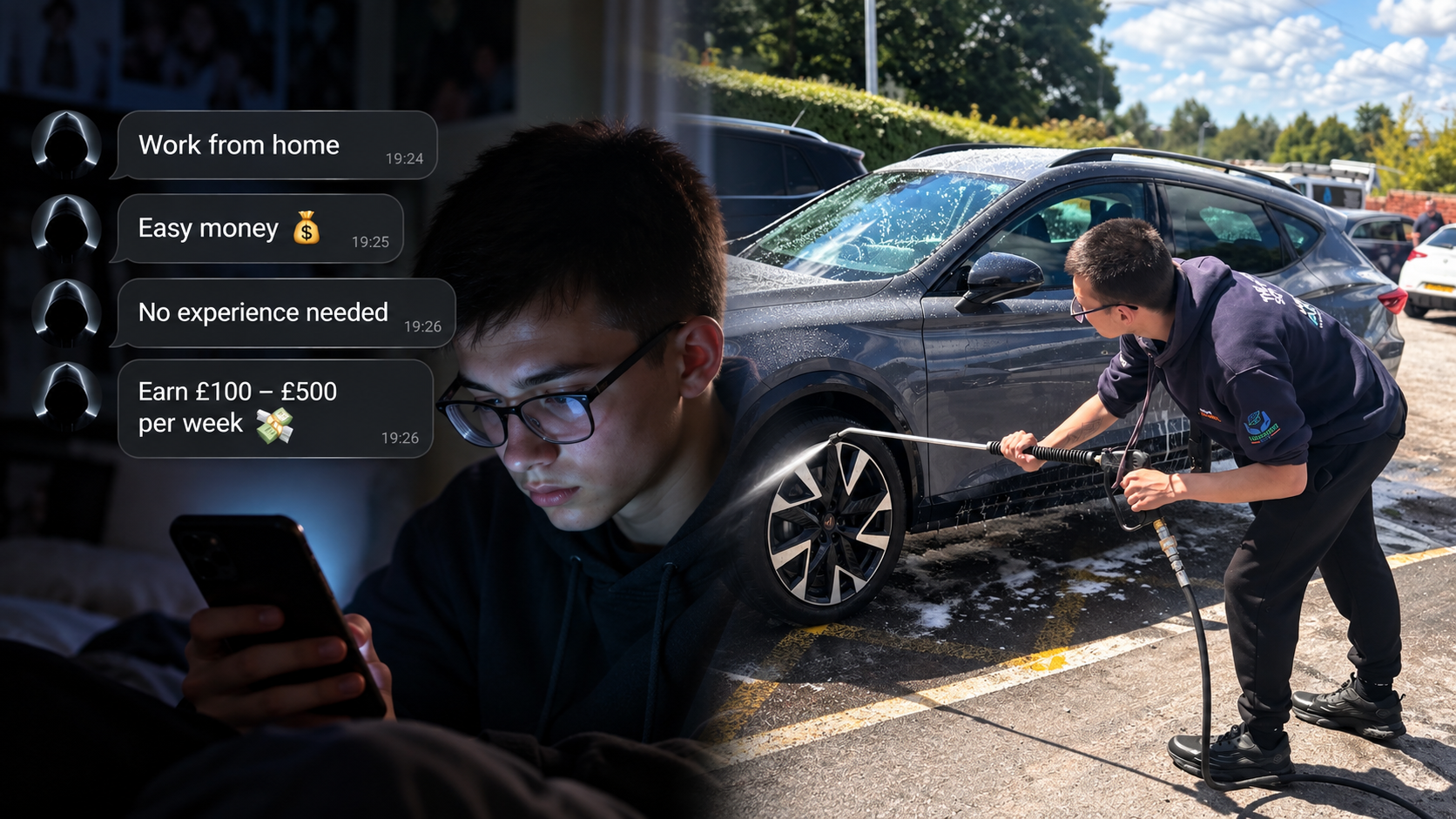
“Work from home.”
“Easy money.”
“No experience needed.”
“Earn £100–£500 per week.”
They sound like job adverts.
According to West Yorkshire Police, they are among the phrases being used by organised criminals on social media to recruit people as so-called “parcel mules”.
A Guardian report published on 23 September says criminals are using Snapchat, Instagram, TikTok and Facebook to target students and vulnerable adults, offering money for receiving and transferring packages that could contain drugs, prohibited weapons, stolen or counterfeit goods, fraudulently purchased products or criminal cash.
This should concern parents, schools, colleges, universities, youth organisations, employers and communities well beyond West Yorkshire.
But at Genuine Futures, we think it raises another question too:
If criminals can reach young people through the device in their hand, why can’t opportunity reach them just as effectively?
That question should make all of us think.
Criminals Understand How to Market an Opportunity
There is something uncomfortable we need to acknowledge.
People seeking to exploit young people understand some of their motivations extremely well.
Money.
Independence.
Status.
Belonging.
Excitement.
Recognition.
An opportunity to feel useful.
None of those aspirations is inherently wrong.
The problem is what happens when somebody exploits them.
Government guidance specifically recognises the use of social media, messaging apps, gaming sites and other online platforms to target potential victims. It warns that exploiters can build false relationships or post fraudulent job adverts that appear legitimate.
This isn’t simply a policing problem.
It is an opportunity problem, a safeguarding problem and a prevention problem too.
“We Need to Get There First”
Sam Smith, Founder and Co-Director of Genuine Futures CIC, says:
“Criminals understand something we sometimes forget. Young people want money, independence, belonging and opportunity. There is nothing wrong with wanting those things. The danger is when somebody comes along and exploits those ambitions.”
And that leads to a much bigger challenge:
“If somebody can recruit a young person into exploitation through a phone, we should be able to reach that same young person with opportunity. We need to get there first.”
That doesn’t mean every young person without a job is vulnerable to criminal exploitation.
Far from it.
But we should recognise that exploiters deliberately look for vulnerabilities they can manipulate.
Official government guidance is clear that any child, young person or vulnerable adult can potentially be targeted. It also identifies circumstances that can heighten vulnerability, including unstable home environments, previous abuse or neglect, contact with the criminal justice system and difficulties developing trusted relationships or accessing support.
Prevention therefore matters.
The Scale of Child Criminal Exploitation Cannot Be Ignored
This isn’t a marginal issue.
Home Office figures published in July 2026 estimate that approximately 15,500 children were identified as being at risk of or involved in child criminal exploitation in the year ending March 2025.
The Home Office itself says that is likely to be a significant underestimate.
And exploitation isn’t always obvious.
Greater Manchester Police explains that children can be targeted through social media and gaming forums, and that a young person can be exploited even when they appear to be participating willingly.
Crucially, many young people being exploited do not recognise themselves as victims.
That changes how we need to respond.
Simply telling young people to “make better choices” isn’t enough.
We need to understand who is influencing those choices, what is being offered and what legitimate alternative we are putting in front of them.
The Bedroom Generation Has Another Risk
We recently wrote about what Genuine Futures calls the Bedroom Generation.
Young people increasingly live significant parts of their social lives through their phones.
They communicate online.
They learn online.
They game online.
They seek advice online.
They look for jobs online.
And, increasingly, people seeking to exploit them are there too.
The same technology capable of opening a young person’s world can also bring exploitation directly into their bedroom.
Government guidance explicitly recognises that child criminal exploitation does not require physical contact and can happen through technology.
That means prevention has to exist in both worlds.
Online and offline.
Parents and Carers: Know the Warning Signs
West Yorkshire Police’s advice in the Guardian report identifies several behaviours worth paying attention to.
Be particularly cautious if somebody offers money simply for receiving deliveries, asks to use a young person’s address without a clear explanation, uses different names or addresses, refuses to explain what is inside a package, puts pressure on them to decide quickly, or insists something is legal without properly explaining why.
Government guidance identifies other potential indicators of exploitation, including unusual amounts of time online, secrecy or anxiety about online relationships, unexplained money or gifts, unusual financial transactions and sudden changes in behaviour around money.
None of these signs on its own proves exploitation.
But they can justify a conversation.
And that conversation matters.
Don’t Start With Judgement. Start With Listening.
Imagine a young person has already accepted £100.
Perhaps they’ve received a parcel.
Perhaps they’re frightened.
Perhaps they’ve realised something isn’t right.
Perhaps the person who recruited them now knows their home address.
The worst thing we can do is create an environment where that young person thinks:
“I’m already in trouble, so I can’t tell anyone.”
This is where trusted relationships become critical.
Ask what happened.
Listen.
Don’t immediately assume you understand the situation.
And don’t automatically treat a potentially exploited child as simply an offender.
The law and safeguarding guidance recognise that exploitation can involve manipulation, coercion and an imbalance of power even where the activity initially appears consensual.
Don’t Just Tell Young People What Not to Do
This is where Genuine Futures believes the conversation needs to change.
We can run awareness campaigns.
We can produce posters.
We can warn young people about gangs.
All of that has a place.
But after telling a young person:
“Don’t make money that way.”
We should also be able to answer:
“So how can I make money?”
That’s where prevention becomes practical.
Enterprise Before Exploitation
At Genuine Futures, we believe in:
Enterprise Before Exploitation.
Give young people legitimate ways to develop the things exploiters pretend to offer.
Independence.
Income.
Belonging.
Responsibility.
Recognition.
Purpose.
Progression.
Through our Boss Your Future programme, we work alongside young people to build confidence and expose them to employment, enterprise, education, employers, trades and new experiences.
Through We Shine Any Car, young people can experience enterprise in the real world.
They’re not sitting in a classroom being told what employment might look like.
They’re meeting customers.
Learning practical skills.
Working together.
Taking responsibility.
Understanding money.
Building confidence.
And beginning to see themselves differently.
That’s prevention in practice.
“Don’t Just Say No to £100. Create Another Route.”
Sam Smith says:
“Don’t just tell a young person not to make £100 the wrong way. Help them understand how they can earn, learn and build something legitimately.”
And importantly:
“We shouldn’t wait until somebody is arrested, excluded, exploited or completely disengaged before surrounding them with support. If we can see vulnerability developing earlier, that’s when we should act.”
That is why our message remains:
Prevention before crisis.
Employers: This Is Your Challenge Too
We need businesses in this conversation.
Criminal networks don’t ask a young person for five GCSEs before giving them a role.
They don’t ask for two years’ experience.
They don’t reject somebody because their CV has a gap.
Of course, legitimate employers have responsibilities and safeguarding requirements that criminals deliberately ignore.
But there is still a lesson here.
How easy are we making it for a young person to access their first legitimate opportunity?
Could your business provide:
work experience?
a workplace visit?
a Try a Trade session?
mentoring?
an apprenticeship?
a paid shift?
a first job?
enterprise support?
equipment?
a business challenge?
or simply two hours showing a young person an industry they have never experienced?
Small opportunities can change trajectories.
Schools and Colleges: Exploitation Prevention Must Be Relevant
This also cannot become another assembly that young people forget by lunchtime.
Show young people what recruitment actually looks like.
Discuss fake job adverts.
Talk about money.
Talk about social media.
Talk about pressure.
Talk about gaming platforms and messaging apps.
Explain how grooming can develop.
And most importantly:
give young people somewhere safe to go when something doesn’t feel right.
Prevention works better when the young person trusts the person delivering the message.
What If a Young Person Is Already Involved?
The Guardian reports that police advice for somebody who suspects they have been recruited as a parcel mule is to stop involvement, preserve messages, emails or screenshots and report their concerns to police. If a parcel arrives that is not addressed to them, the advice is not to open it and to contact the delivery company about its return or collection.
In Greater Manchester, GMP also provides information about child criminal exploitation and how children can be groomed online.
Greater Manchester Police – child criminal exploitation guidance
If somebody is in immediate danger, call 999.
The Question We Should All Be Asking
The criminals described in this latest case have adapted.
They understand social media.
They understand marketing.
They understand how to make something dangerous look like an opportunity.
So our response cannot only begin after exploitation has happened.
We need to become better at marketing hope.
Better at making employment visible.
Better at taking opportunities into communities.
Better at reaching young people online.
Better at providing enterprise.
Better at creating trusted relationships.
Better at listening.
And much better at intervening early.
Because imagine if the message arriving on a young person’s phone wasn’t:
“Easy money.”
Imagine it was:
Come and learn a trade.
Come and meet an employer.
Come and try something you’ve never done before.
Come and build a business idea.
Come and earn legitimately.
Come and discover what you’re capable of.
Enterprise Before Exploitation
This isn’t about labelling young people.
It isn’t about assuming that a young person who is NEET, struggling financially or spending time online will become involved in crime.
It’s about recognising that people seeking to exploit young people are actively competing for their attention.
We should be competing much harder with opportunity.
At Genuine Futures, our answer is straightforward:
Reach earlier.
Listen earlier.
Create opportunity earlier.
Build trusted relationships before crisis.
And make legitimate opportunity easier to find than exploitation.
Enterprise Before Exploitation.
Prevention Before Crisis.
Bridging the Gap to Opportunity.
If you’re a young person, parent, school, college, employer, community organisation or professional who wants to connect with Genuine Futures or Boss Your Future, get in touch.
And if you’re an employer reading this, ask yourself one question:
What opportunity could you put in front of a young person before somebody else puts exploitation in front of them?
Sources: The Guardian – West Yorkshire criminals using social media to recruit studentsAttachment.png · UK Government – criminal exploitation and county lines guidanceAttachment.png · Home Office – County Lines Programme dataAttachment.png · Greater Manchester Police – child criminal exploitation