
At Risk of NEET by Age 5? Why Early Intervention in the UK Is Failing Young People
Posted on:
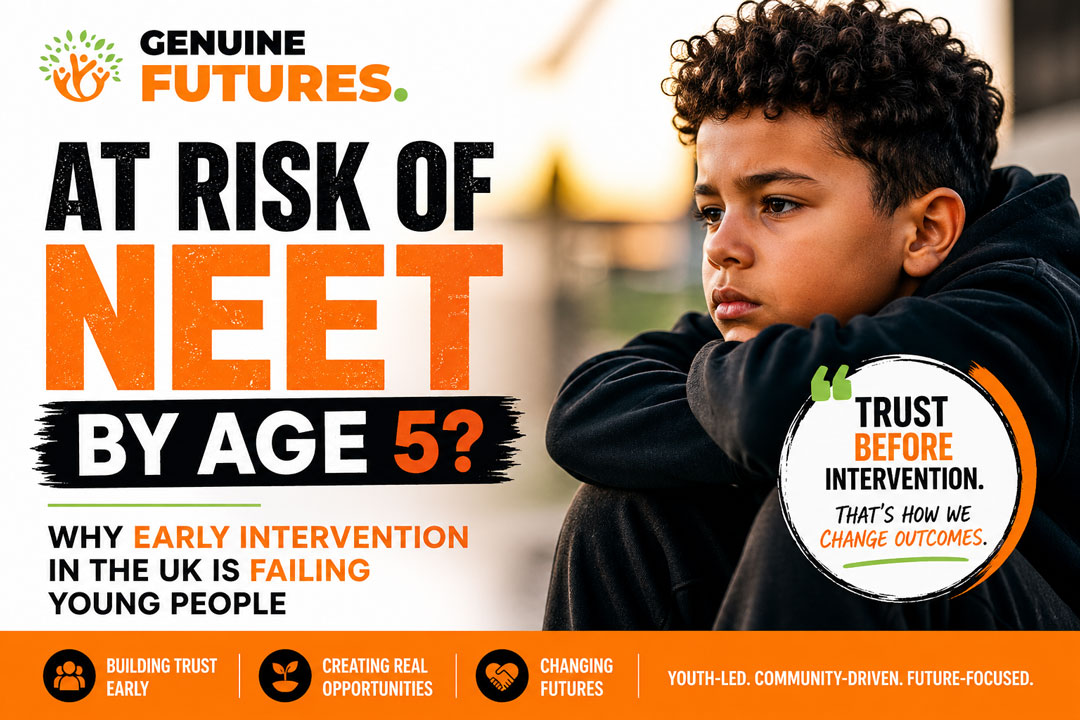
Children Are Being Identified Early—So Why Are Outcomes Not Changing?
Across the UK, there is growing recognition that children can show signs of being at risk of becoming Not in Education, Employment or Training (NEET) as early as primary school.
Recent insights highlighted by Children & Young People Now suggest that risk factors can be identified from as young as age five.
On paper, this sounds like progress.
But from frontline experience, a different reality is playing out:
We are getting better at identifying risk—but not at changing outcomes.
What Does NEET Mean in the UK?
NEET refers to young people who are not in education, employment, or training. Across the UK, this group continues to grow, with many young people facing multiple barriers including:
- School exclusion
- Poor mental health
- Lack of opportunity
- Disengagement from traditional education
- Negative experiences with support systems
But these challenges rarely begin at 16 or 18.
They start much earlier.
At Risk by Age 5: The Early Warning Signs
Children don’t suddenly disengage overnight.
The early indicators are often clear:
- Low attendance or behavioural challenges
- Difficulty engaging in structured environments
- Early signs of anxiety or low confidence
- Family instability or exposure to negative experiences
In many cases, these children are already being noticed.
The problem is what happens next.
Why Early Intervention in the UK Is Failing
Despite increased awareness, early intervention is often falling short for one key reason:
It focuses on systems, not relationships.
1. Trust Is Already Broken
Many young people—and their families—have had negative experiences with services.
Older siblings may have been excluded, criminalised, or unsupported. That experience shapes the mindset of younger children before support even begins.
Sam Smith, Co-Director of Genuine Futures CIC:
“By the time we meet some young people, they’ve already decided they don’t trust the system. That doesn’t start at 16—that starts in childhood, from what they’ve seen happen to people around them.”
2. Stigma Shapes Outcomes Early
Stigma within families and communities plays a powerful role.
Young people are often judged based on family history or compared to siblings who have struggled.
Mike Alleyne, Co-Director of Genuine Futures CIC:
“We see young people being labelled before anyone has taken the time to understand them. Once that label sticks, expectations drop—and that’s where the real damage begins.”
This can lead to a self-fulfilling cycle:
Low expectations → disengagement → limited opportunities
3. Education Doesn’t Work for Everyone
Traditional education environments can create anxiety rather than opportunity for some young people.
Young Person (Boss Your Future participant):
“School just wasn’t for me. I felt like I was always in trouble or getting things wrong. After a while, you just stop trying.”
When young people feel they don’t fit the system, they begin to disconnect from it.
4. Intervention Comes Too Late
Support is often introduced after a young person has already reached crisis point.
Sam Smith:
“We wait until a young person is excluded, out of college, or in trouble before we step in. By then, we’re not preventing anything—we’re trying to repair damage that could have been avoided.”
The Missing Piece: Trust Before Intervention
Early identification alone is not enough.
Data cannot replace relationships.
Young Person (Genuine Futures participant):
“At first, I didn’t think this would be any different. But they actually listened. That’s what made me stay.”
Without trust, engagement doesn’t happen.
And without engagement, outcomes don’t change.
A Different Approach: Lived Experience in Action
At Genuine Futures CIC, early intervention is built on lived experience and consistent engagement.
We don’t wait for crisis.
We build connection early.
How We Work
1. Building Trust First
We prioritise relationships over programmes:
- Showing up consistently
- Listening without judgement
- Creating safe, informal environments
Mike Alleyne:
“Young people don’t need another programme—they need people who are consistent, who show up, and who don’t give up on them.”
2. Meeting Young People Where They Are
Engagement starts in real environments:
- Communities
- Streets
- Youth-led spaces
3. Creating Real Opportunities Early
Through enterprise and hands-on learning, young people gain:
- Confidence
- Responsibility
- Purpose
Young Person (We Shine Any Car project):
“This is the first time I’ve felt like I’m actually doing something real. Not just sitting in a classroom—I’m learning by doing.”
4. Understanding the Whole Picture
We work with the wider context:
- Family dynamics
- Community influences
- Generational experiences
What Happens When We Get It Right
When young people are engaged early through trust and opportunity, outcomes shift:
- Re-engagement with learning
- Increased confidence
- Progression into work or enterprise
- Stronger community connections
Sam Smith:
“When young people feel believed in, everything changes. You start to see confidence, responsibility, and ambition come through.”
The Cost of Getting It Wrong
Failing to act early leads to:
- Rising NEET numbers
- Increased youth unemployment
- Greater strain on public services
- Higher risk of justice system involvement
This is not just a youth issue.
It’s a system failure.
From Early Risk to Early Opportunity
If we are serious about change, the shift must be clear:
From identifying risk → To building trust early
From labelling young people → To understanding lived experience
From short-term support → To long-term, relationship-led engagement
Final Thought
Children at risk of becoming NEET are not hidden.
They are already in our schools, homes, and communities.
Young Person:
“You can tell when people don’t really care. That’s why most of us don’t bother. But when someone does—it makes a difference.”
The question is not whether we can identify risk.
The question is whether we are willing to respond differently.
Call to Action
If you’re a school, local authority, or organisation looking to engage young people earlier—and rebuild trust where it’s already been lost:
Work with Genuine Futures CIC.
Together, we can move beyond identifying risk—and start creating real pathways for young people to succeed.