
Alan Milburn Warns of a “Social Catastrophe” as Youth Worklessness Nears One Million
Posted on:
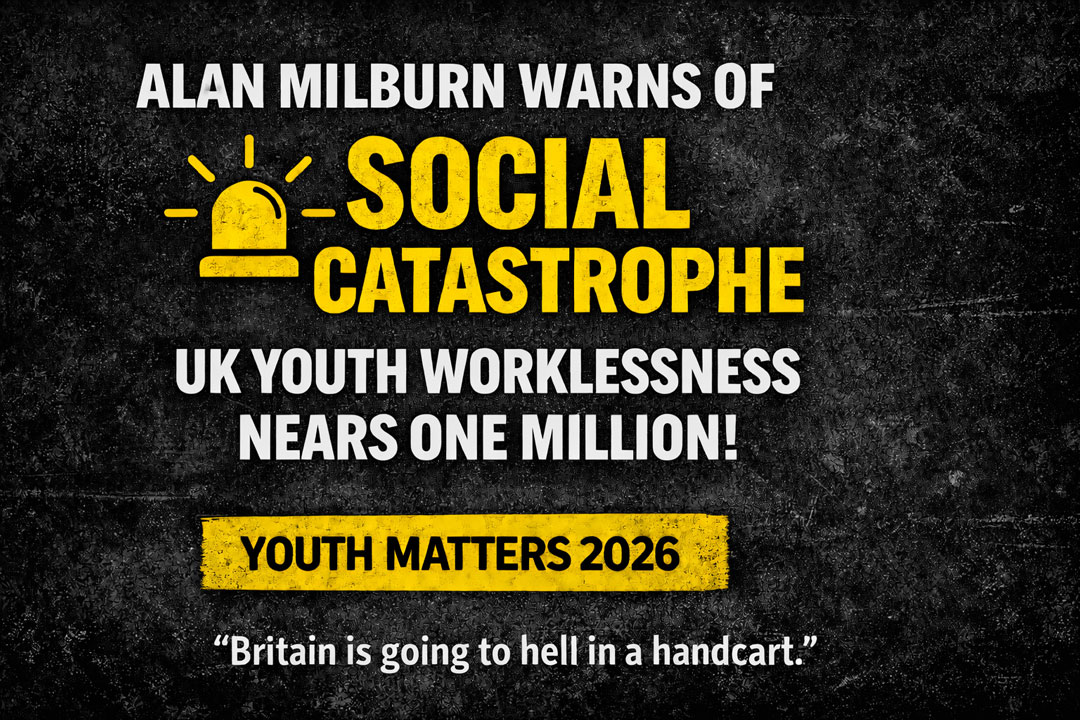
“Britain is going to hell in a handcart.”
That was the stark warning from Alan Milburn as he leads the Government’s review into why nearly one million young people are not in education, employment or training.
He has been clear: he is not prepared to accept that a generation of young people are “destined for the scrapheap.”
The language is strong. But the scale of the issue is stronger.
This is not a marginal policy concern. It is a defining economic and social challenge.
A Generation at Risk
The number of 16–24-year-olds classified as NEET (Not in Education, Employment or Training) has climbed close to one million — approximately one in eight young people.
Behind that headline figure sit deeper structural realities:
- A rise in economic inactivity, not just unemployment
- Increasing reports of long-term health conditions, particularly mental health challenges
- A labour market dominated by insecure, low-paid, low-progression roles
- Growing disengagement from systems that many young people no longer trust
Youth worklessness is no longer simply about a lack of jobs. It is about detachment — from education, from opportunity, and often from belief in the system itself.
Milburn’s warning of a potential “social catastrophe” reflects concern that long-term disengagement from work and learning creates lasting consequences: lower lifetime earnings, weaker wellbeing, and sustained pressure on public services.
This Is More Than a Labour Market Problem
At its core, this is a transition problem.
The pathway from school to adulthood has become fragmented.
For too many young people:
- School did not work for them
- College felt inaccessible or unsupported
- Apprenticeships were oversubscribed
- Entry-level roles demanded experience they did not yet have
Add in anxiety, SEND needs, housing instability, family pressures, or financial stress — and the pathway narrows further.
Economic inactivity among young people is rising because many are not actively seeking work. That is not evidence of apathy. It often signals discouragement, ill-health, or a lack of tailored, accessible support.
When systems feel confusing, transactional, or short-term, young people withdraw.
The Cost of Writing Off a Generation
The phrase “destined for the scrapheap” is deliberately provocative.
But history shows that early detachment from work or education leaves scars that can last decades. Long-term youth worklessness is associated with:
- Reduced lifetime earnings
- Recurring periods of unemployment
- Increased mental health challenges
- Higher public spending on crisis services
Economically, the impact runs into billions in lost productivity.
Socially, it deepens inequality and fuels frustration.
Communities feel it first. Employers feel it next. The Treasury feels it eventually.
The cost of prevention is significant.
The cost of inaction is far greater.
What Works?
Milburn’s review is examining structural barriers that keep young people disconnected from opportunity.
Evidence consistently shows that effective interventions share common characteristics:
- Early intervention before disengagement becomes entrenched
- Holistic support combining health, mentoring, skills and employer engagement
- Strong employer partnerships providing real-world pathways
- Flexible, person-centred delivery rather than one-size-fits-all programmes
- Trust-building environments where young people feel seen and heard
Short-term pilots rarely create sustainable change.
Coordinated systems do.
This means joined-up thinking across education, employment, health and local government — with funding cycles that match the scale of the challenge.
Reframing the Narrative
Public debate matters.
When language drifts towards “workshy” or “lost generation,” it reinforces stigma. Many young people who are NEET are not disengaged from ambition — they are disengaged from systems that have not worked for them.
The issue is not a lack of potential.
It is a lack of accessible opportunity.
Reframing the narrative is essential if policy is to be both effective and fair.
Youth Matters 2026: A Defining Moment
Youth Matters 2026 must not be a slogan. It must be a strategy.
If nearly one million young people are detached from work or learning, this is not an individual failure. It is a structural signal.
The response must include:
- Stronger bridges between school and employment
- Investment in youth mental health services
- Employer incentives aligned with social value
- Community-based enterprise pathways
- Long-term funding commitments rather than short-term pilots
Prevention must become as valued as crisis response.
The question is not whether the warning grabs headlines.
It is whether it drives delivery.
Final Thought
A country does not drift into crisis overnight. It drifts when warning signs are normalised.
Calling it “hell in a handcart” may sound dramatic.
Allowing one million young people to feel disconnected from opportunity would be worse.
Youth Matters 2026 is a moment to shift from diagnosis to action.
The test now is whether we are prepared to invest early, coordinate properly, and build systems that work — not just for some young people, but for all of them.