
Britain Is Facing an Epidemic of Fatherlessness — And the Cost Is Being Paid by Our Children
Posted on:
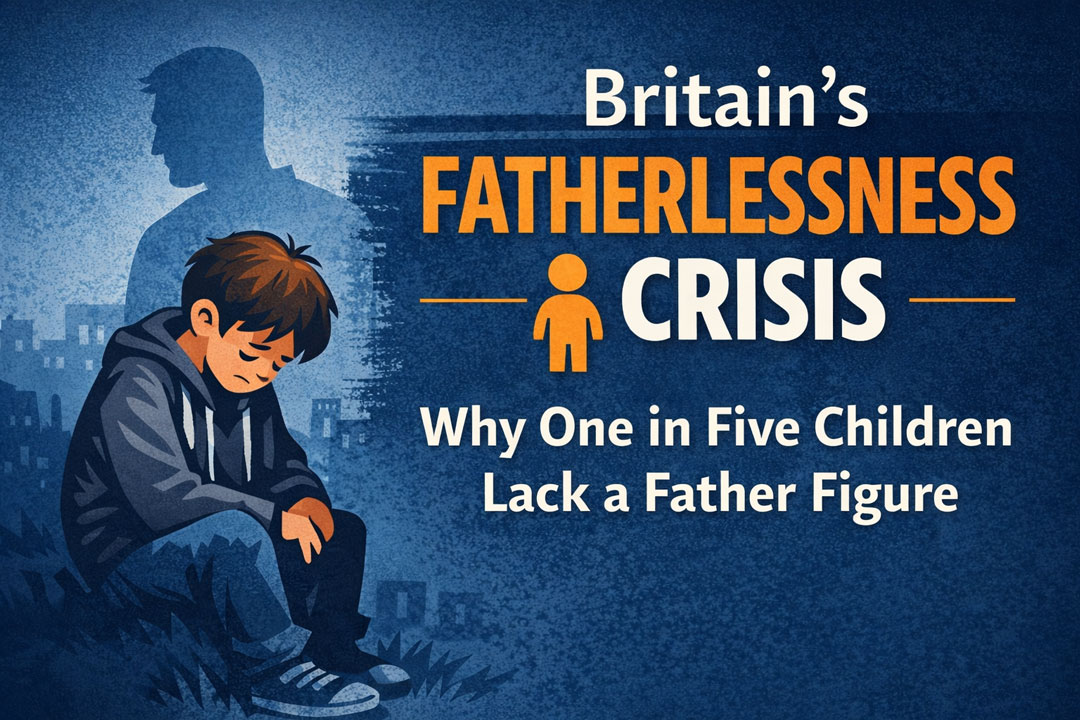
Britain is suffering from a quiet but devastating epidemic: fatherlessness.
Today, 2.5 million children in the UK are growing up without a father figure at home — one in five of all dependent children. This is no longer a marginal social issue. It is a structural challenge with far-reaching consequences for families, communities, public services, and future generations.
Even more concerning is the speed of change.
Almost half of first-born children do not live with both natural parents by the age of 14. For those born in 1970, that figure was just 21 per cent. In one generation, family stability has fundamentally shifted.
This is not about nostalgia or blame. It is about evidence, outcomes, and responsibility.
The Scale of Father Absence in the UK
The rise in father absence reflects broader social and economic pressures — relationship breakdown, insecure work, housing instability, mental health challenges, and a system that often intervenes too late and supports too little.
Key facts that cannot be ignored:
- 2.5 million children have no father figure at home
- 1 in 5 UK children grow up without an involved father
- Nearly 50% of first-born children experience parental separation by early adolescence
- Family breakdown rates have more than doubled since the 1970s
Fatherlessness is now a mainstream reality, not an exception.
Why Fatherlessness Matters for Children
Research consistently shows that the absence of a stable father figure is associated with increased risks across multiple areas of a child’s life. This does not mean single parents fail — many do extraordinary work — but it does highlight the protective role of consistent adult male involvement.
Children growing up without a father are statistically more likely to experience:
- Poorer educational outcomes
- Higher risk of behavioural and emotional difficulties
- Increased likelihood of exclusion from school
- Greater vulnerability to exploitation and criminal justice involvement
- Lower long-term employment and income prospects
For boys in particular, the absence of positive male role models can leave a gap that is often filled by peers, social media, or harmful influences.
The Wider Social Cost of Fatherlessness
Fatherlessness does not exist in isolation. It intersects with:
- Youth violence and exploitation
- School exclusion and disengagement
- Mental health crises among adolescents
- Rising numbers of young people not in education, employment or training (NEET)
- Increased pressure on social care, policing, and the justice system
When early family breakdown is not met with early, relational support, the cost is simply deferred — and multiplied.
Moving Beyond Blame: What Needs to Change
This is not a conversation about blaming fathers, mothers, or families. It is a conversation about systems, support, and prevention.
Meaningful change requires:
- Early intervention when families begin to struggle
- Support for fathers to remain involved, not excluded
- Community-based mentoring and trusted adult relationships
- Safe spaces where boys and young men can build identity, confidence, and purpose
- Policies that recognise family stability as a public good, not a private issue
Father figures do not only come from biology. Coaches, mentors, youth workers, employers, and community leaders all play a critical role — especially where families are already under strain.
Why This Conversation Matters Now
Britain cannot talk seriously about:
- Reducing youth violence
- Tackling school exclusions
- Improving mental health outcomes
- Lowering NEET figures
- Breaking cycles of poverty
without also confronting the reality of fatherlessness and family breakdown.
Ignoring it does not make it go away. It simply leaves children to navigate complex challenges alone — often until crisis point.
A Call for Leadership, Not Silence
Fatherlessness is not inevitable. Its impacts are not unavoidable. But addressing it requires honest leadership, long-term thinking, and investment in relationships — not just services.
Every child deserves:
- Stability
- Consistent role models
- Adults who show up, stay involved, and set boundaries with care
If we want better outcomes for young people, we must start earlier, listen more carefully, and act before absence becomes abandonment.
Because the cost of doing nothing is already being paid — by children who never chose this reality.