
Children Living in Illegal Children’s Homes: A System Still Failing Its Most Vulnerable
Posted on:
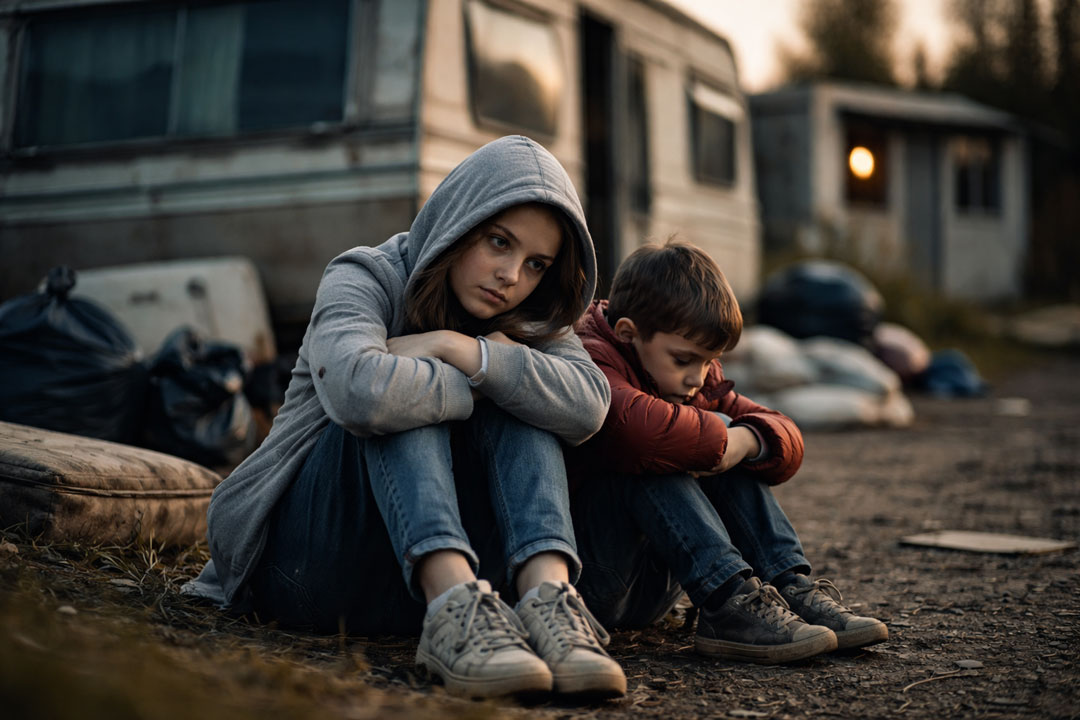
On 11 January 2026, the Children’s Commissioner for England published a follow-up report that should stop policymakers, commissioners, and providers in their tracks. One year on from first exposing the use of illegal children’s homes, the conclusion is stark: too little has changed.
Children in care continue to be placed in unregulated, unsafe settings — not because it is right, lawful, or effective, but because the system has run out of proper options.
What are illegal children’s homes?
These placements are not registered children’s homes and are not subject to routine inspection or oversight. They include caravans, holiday lets, hotels, and short-term rentals, often operated by private companies outside the regulatory framework.
Children placed in these settings are frequently isolated, inadequately supported, and exposed to increased risks of harm. These placements are already illegal — yet they continue to be used.
The scale of the problem
As of 1 September 2025, 669 children in care were living in illegal placements. While this represents a reduction from 764 the year before, focusing on the headline figure risks missing the deeper failure.
The average weekly cost of these placements is £10,500. Over the past 12 months, local authorities have spent an estimated £353 million on arrangements that cannot meet children’s needs and, in many cases, actively undermine their safety and wellbeing.
This is not just poor commissioning. It is a systemic breakdown.
Children left behind — year after year
One of the most troubling findings is that some children were recorded in last year’s data and remained in illegal placements a full year later. For those children, no lawful, safe solution was found — either because none existed or because the system failed to act with sufficient urgency.
This is what failure looks like in children’s services: when the quality of care a child receives is dictated by a lack of options rather than by their needs.
A system that moves children instead of supporting them
In recent years, there have been important reforms across children’s services:
- Fewer children in youth custody
- Disabled children moved out of long-stay institutions
- Reduced reliance on inpatient mental health care
While each change matters, taken together they have too often resulted in children being shifted elsewhere, rather than properly supported. Illegal homes have become the pressure valve for a system that has not built enough regulated, therapeutic alternatives.
This is displacement, not reform.
The rise of the “million-pound child”
The report highlights a deeply concerning trend: more children than last year were in illegal placements that had already cost over £1 million each by September 2025.
These placements represent:
- Care that is unsafe and unlawful
- Children placed far from family, community, and stability
- Vast public expenditure that could have funded early intervention, specialist foster care, and local provision
This is a false economy — expensive, ineffective, and damaging.
Even very young children are affected
Although most children in illegal placements are older teenagers, the data confirms that pre-school-age children remain among those affected. That this is still happening a year after the issue was first exposed is indefensible.
The human cost behind the data
Behind the statistics are children living with the daily consequences of system failure.
- Summer was moved between four placements in six months before being placed in an illegal home, surrounded by staff who spoke limited English, without proper washing facilities, and expected to manage food and finances alone.
- Amelia, whose behaviour escalated under stress, has lived in caravans, hotels, and holiday accommodation — none of which helped address her needs or provide stability.
These are not anomalies. They are symptoms of a system operating permanently in crisis mode.
Legislative progress — but children cannot wait
There have been opportunities for change. The Children’s Wellbeing and Schools Bill, introduced shortly after the first report in December 2024, includes important proposals to strengthen oversight. These include new enforcement powers for Ofsted to issue civil penalties against providers operating unregistered children’s homes, and amendments to the Children Act to create lawful accommodation where deprivation of liberty is necessary to keep children safe.
However, these provisions are not yet in force, and serious questions remain:
- How quickly will they lead to meaningful change?
- Will fines deter multi-million-pound providers?
- What happens to children while lawful alternatives remain unavailable?
Oversight without alternatives is not protection.
What must change
Children will continue to be failed unless children’s social care is backed by serious, long-term investment, including:
- Early intervention and trauma-informed therapeutic support
- Recruitment of specialist foster carers
- Rapid expansion of high-quality, regulated children’s homes
- Better coordination between social care, health, education, and youth justice
- Commissioning strategies designed for children with high and complex needs
Without this, the system will remain dependent on costly, harmful crisis placements.
Rethinking risk — and responsibility
Finding long-term solutions for 669 children should be entirely achievable. What is missing is not evidence, but ambition.
We must stop pretending that locking a child alone in a flat under constant surveillance, or placing them in a caravan without basic facilities, is the “risk-averse” option. It is not.
It is deeply risky, deeply harmful, and incompatible with any credible understanding of children’s best interests.
A bellwether for the whole system
These 669 children must be the line in the sand.
If we can get it right for them — by building lawful, compassionate, properly supported alternatives — we can get it right for all children in care. If we cannot, then the system will continue to cycle through the same failures, at immense human and financial cost.
Children deserve better than emergency fixes and illegal placements.
They deserve safety, stability, and a system designed to care — not cope.