A State of Emergency for Our Children: Bolton Has Been Building Solutions for Years
Posted on:
A warning we cannot ignore
When the Children’s Commissioner for England, Dame Rachel de Souza, describes the challenges facing children in some places as a “state of emergency”, I hear a warning that demands action.
Her Childhood Lottery analysis brings together more than 160 measures of children’s lives. It shows how a child’s health, education, safety and opportunities can be shaped by where they grow up. The Commissioner says the differences between places are stark, and that no community can afford to be complacent.
The Observer reports that the analysis found around one in three children are not ready for school at five, 12% of young people feel unsafe in their local area, and more than one million children had active referrals to mental health services last year. Behind every figure is a child trying to grow up, learn and find their place in the world.
This is not a sudden crisis. I believe we have been seeing the warning signs for decades.
I grew up in Bolton and left in 1995. After nearly 30 years away, I came home in 2023. The challenges young people describe today are painfully familiar: feeling excluded, not being listened to, struggling to find a way forward and being expected to navigate systems that do not always join up.
I know some of this from my own life. I was written off at 13. I experienced care, exclusion and the justice system. I know how easily adults can see a label before they see the person — and how long a young person can carry the belief that nobody expects them to succeed.
The signs were there before the reports
Alan Milburn’s review on young people and work has brought renewed attention to the scale of the NEET crisis. His interim report, published in May 2026, said nearly one million young people aged 16 to 24 were not in education, employment or training. It described a worsening problem and highlighted how many young people had become detached from the labour market.
The report also found that six in ten young people who are NEET had never had a job, compared with four in ten in 2005. It warns that these patterns have been building over time.
For me, those findings do not describe a problem that has just appeared. They put national evidence around what young people, families and communities have been telling us for years: too many are losing connection with education, work and opportunity, while support often arrives too late.
The interim report is not the same as Milburn’s final recommendations, which are due later. But we do not need to wait for another report to start acting.
We envisioned a solution in 2022
I first envisioned Genuine Futures in 2022. I wanted to bring together like-minded people to develop solutions to the barriers that stop young people reaching opportunity — through education, employment and enterprise.
We launched Genuine Futures in 2023. From the beginning, we have been youth organising in Bolton: listening to young people, creating spaces where they can belong, and supporting them to shape what happens next.
We have heard about the barriers young people face. We have also seen their ideas, creativity, ambition and potential. Young people do not need to be treated as a problem to solve. They need to be recognised as people with strengths and a stake in their community’s future.
That means more than asking for their views after decisions have already been made. Young people need a genuine voice and a seat at the table where priorities and solutions are shaped.
Our work began well before the Milburn interim report was published. Boss Your Future and We Shine Any Car grew from our work with young people and our belief that support must connect to real experience, relationships and opportunities.
The Bolton NEET Taskforce is the next part of that work: bringing partners together while keeping young people’s voices at its heart. We want young people to help identify what is missing, shape the response and hold us to account for turning conversations into action.
The young people’s voices behind the work
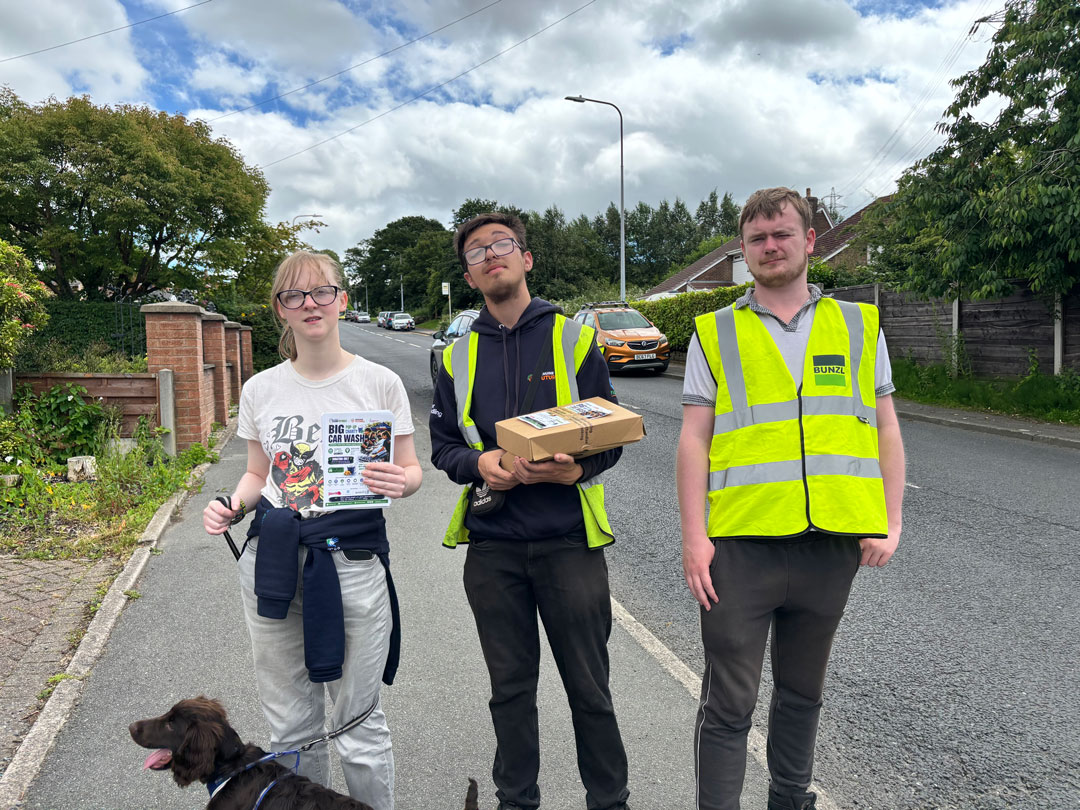
Youth voice is not an add-on to the Taskforce. It is one of the reasons it exists — and Paula, Luis and Cameron each bring their own strengths and experience to that work.
Paula Yates, Creative Lead, uses creativity and storytelling to help young people express themselves and share their perspectives. She has said: “I’ve faced challenges that people don’t always see. Now I want my voice to help make things better for others.”
Luis Green, Genuine Futures’ Youth Voice and Media Spokesperson, helps bring young people’s experiences into conversations with partners and the wider community. He has spoken about what it means to move from feeling left behind to being heard: “Being given a voice like this shows young people that we do matter, and that our experiences count.”
Cameron Hughes, Youth Voice Ambassador, contributes to youth voice work and supports bin-store audits, turning community action into a practical opportunity for young people to take part and make a difference. His words capture why relationships and inclusion matter: “It starts with one conversation and one seat at the table.”
Their roles show what it means to give young people more than a platform. They are helping shape the work, share their insight and create opportunities for others to get involved.
The solutions are already being built
The Milburn Review is important because it recognises the scale of the problem and the way different systems interact. But young people cannot wait for every recommendation to be published, debated and turned into a plan.
In Bolton, we are already building local responses: trusted relationships, places to belong, youth voice, enterprise, employability and practical routes into education and work. These are not a replacement for specialist mental health care, social care or public services. They are part of a wider response that can help young people connect with support and opportunity earlier.
The Children’s Commissioner’s report makes a related point: children’s lives do not fit neatly into separate services, and systems need to work for children rather than leaving children to live with the consequences when they fail.
That requires local authorities, schools, health services, youth organisations, employers, families and communities to work together. It also requires us to listen to young people and share the decisions that affect them.
Bolton’s young people must help shape Bolton’s future
I believe there is enormous potential in Bolton. I see it in the young people we work alongside and in the community organisations, schools, businesses and partners who want a better future for our town.
But potential needs opportunity. Young people should not have to wait for a crisis before someone notices what they need. They should not be spoken about without being included. And they should not be expected to navigate complex systems alone.
We started the Bolton NEET Taskforce because tackling these barriers requires shared effort. We started it because young people deserve to help shape the answer — with a voice, influence and a seat at the table.
I know what it feels like when people make assumptions about your future. I also know what can happen when someone listens, believes in your potential and gives you a real opportunity.
We have been seeing the warning signs for too long. The reports matter, but the work must reach young people now. In Bolton, solutions are already being built — with young people, alongside partners and rooted in community.
Every young person deserves to feel heard, safe and able to imagine a future. It starts with listening. It continues with action.